
$920 Million a Month. Let That Sink In.
Google just agreed to pay SpaceX $920 million per month — that’s roughly $11 billion a year — to rent access to approximately 110,000 NVIDIA GPUs. The contract runs from October 2026 through June 2029, with an early-exit clause if things cool off by end of year. Not gonna lie, when I first saw this number I thought it was a typo. It’s not.
And the more you dig into what’s actually happening here, the more it reveals about the current state of AI infrastructure — and why it should matter to every developer, builder, and tech nerd trying to work with these tools.
What’s Actually Going On
Google officially described this as “a short-term, timely agreement to ensure we have bridge capacity to meet surging customer demand” for its Gemini Enterprise platform. Translation: their own growth projections blew past reality, and they need more GPUs right now — faster than they can build new data centers or wait on TSMC to fabricate more chips.
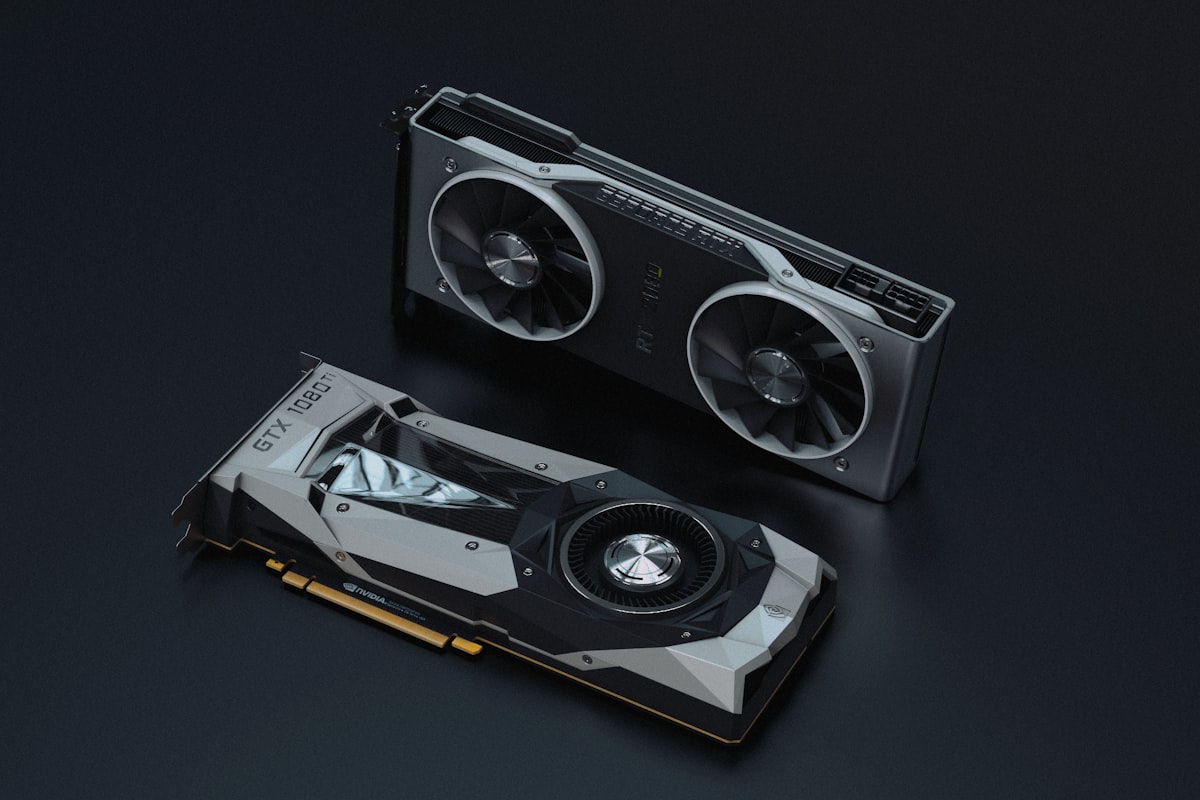
That’s what $920M a month buys you: roughly 110,000 NVIDIA GPUs sitting in SpaceX-controlled facilities, ready to absorb the AI inference and training workloads that Google’s own infrastructure can’t handle fast enough. The contract technically starts in October but there’s a bail-out clause after December 31, 2026 with 90 days’ notice. So if demand cools, they can walk. That’s actually the hedge — the cost of not having compute when you need it is apparently worse than overpaying for it.
Here’s the Wild Part — Google Already Owns More Compute Than Anyone
Google is estimated to be the world’s largest single owner of AI compute. They have their own TPU chips (Tensor Processing Units) purpose-built for AI workloads. They’ve been investing in data centers for literally decades. They have more GPU resources than most countries.
And they still ran out.
That’s the real headline buried in this deal. This isn’t a startup that maxed out its AWS credits. This is Google — and even they are capacity-constrained against exploding AI demand. If that doesn’t illustrate how fast things are moving in 2026, nothing will.
Anthropic Is Doing the Same Thing — at $1.25B a Month
Google isn’t flying solo here. Anthropic reportedly signed a similar deal with SpaceX just weeks earlier, paying $1.25 billion per month for comparable GPU access. That’s even more, from a company that doesn’t have Google’s balance sheet or existing infrastructure.
Both companies are essentially saying the same thing with their wallets: demand for AI inference is outpacing every forecast, and the cost of missing that demand window exceeds the cost of renting compute at ridiculous rates. That’s how you end up with deals that read like satirical headlines.
SpaceX’s Quiet Pivot Into AI Infrastructure
Here’s the angle that’s flying under most radars: SpaceX is now, functionally, a GPU rental business. They built out massive data center capacity, and they’re monetizing it at premium rates ahead of what’s expected to be one of the largest IPOs in history — at a valuation hovering around $1.75 trillion.
Elon Musk’s company is using its capital access and construction speed to build the compute infrastructure that even hyperscalers can’t spin up fast enough. It’s a legitimately smart play. You don’t just think of SpaceX as rockets anymore — you think of them as critical AI infrastructure. That’s a wild sentence to type, but here we are.
What This Actually Means for Builders and Developers
Alright, Google’s spending billions on GPUs — so what does that mean for you, the person building stuff with AI APIs?
- API costs aren’t dropping anytime soon. When the underlying infrastructure costs this much, expect AI API pricing to stay elevated — or climb if demand keeps spiking the way it has.
- GPU scarcity is real and getting worse. TSMC’s CEO literally said it “will be a long time before we can meet customer demand.” If you’re thinking about local model inference at any scale, plan around constrained availability.
- Smaller, efficient models matter more than ever. Google’s Gemma 4 QAT and similar quantized model releases aren’t just technical flex — they’re a direct response to eye-watering inference costs. The push toward edge AI and quantization is partly a cost-containment strategy disguised as an optimization story.
- Local inference is a legitimate hedge. Tools like Ollama, llama.cpp, and local runners are more strategically valuable now than they’ve ever been. If API costs spike, having a local fallback in your stack isn’t paranoia — it’s good engineering.
The Bigger Picture 🔭
We’re in a moment where AI compute has become the most fought-over resource in tech — more than talent, more than data, arguably more than capital. The companies that can guarantee GPU access are dictating the pace of the entire industry. SpaceX just discovered it has a data center business worth tens of billions annually. Google just admitted its own infrastructure can’t keep pace with demand.
That’s not a normal market. That’s a scramble — and the scramble is happening in real-time at a scale that’s genuinely hard to wrap your head around.
For those of us building on top of AI APIs: diversify your providers, keep tabs on open-source alternatives, and don’t architect your entire stack on the assumption that inference costs stay flat. The compute crunch is here, and it’s moving faster than anyone’s projections.
What’s your take — is spending at this scale sustainable long-term, or are we watching a bubble inflate in slow motion? And are you building any fallbacks into your AI stack for rising costs? Drop a comment below.


Leave a Reply